


Table of Contents
- Why Drought-Tolerant Plants Matter in Lafayette
- Understanding Louisiana's Unique Climate and Soil Conditions
- Top Native Plants That Thrive in Southern Louisiana
- Ornamental Grasses and Groundcovers for Dry Landscapes
- Trees and Shrubs for Long-Term Water Conservation
- Designing Your Water-Wise Landscape with Purpose
- Hardscaping Strategies to Complement Drought-Tolerant Plants
- Irrigation Solutions That Work with Your Plant Selection
- Maintenance Practices for Drought-Resistant Landscapes
- How We Design Custom Drought-Tolerant Landscapes in Lafayette
- Frequently Asked Questions (FAQ)
Why Drought-Tolerant Plants Matter in Lafayette
Water conservation isn't just an environmental concern in Lafayette, Louisiana. It's a practical approach that reduces your monthly utility bills, minimizes landscape maintenance during hot, dry spells, and creates outdoor spaces that naturally thrive in our regional climate. Whether you're managing a residential yard or maintaining commercial grounds, selecting the right plants pays dividends year after year.
Drought-tolerant plants aren't desert cacti or barren xeriscaping. We design landscapes that are lush, beautiful, and resilient. These plants tolerate periods of reduced water without sacrificing visual appeal or structural integrity. The result is a landscape that looks intentional and well-maintained while being fundamentally easier to care for.
When you invest in drought-resistant plantings, you're also reducing strain on local water systems and protecting your property value. A thoughtfully designed low-water landscape demonstrates responsible stewardship and appeals to buyers if you ever decide to sell.
Action step: Take inventory of your current landscape's water usage patterns. Notice which areas dry out fastest and which plants show stress during hot months. This baseline helps us develop a targeted strategy tailored to your property.
Understanding Louisiana's Unique Climate and Soil Conditions
Southern Louisiana presents a distinct challenge for landscaping. Our humid subtropical climate means we experience occasional droughts followed by intense rainfall and high humidity. Our soils tend to be acidic, clay-heavy, and prone to waterlogging in low-lying areas. These conditions require plants that handle both wet and dry extremes.
Many homeowners assume that because Louisiana receives substantial annual rainfall, drought tolerance isn't relevant here. That's a misconception. Summer dry spells are increasingly common, and even our regular growing season includes periods of stress. Selecting plants adapted to these fluctuations reduces reliance on supplemental irrigation.
Understanding your specific soil composition matters immensely. Acidic, clay-based soils in Lafayette area properties typically require plants that tolerate poor drainage and low pH levels. Native species excel in these conditions because they've evolved alongside our regional soil profile over centuries.
Action step: Have your soil tested through your local extension office. Knowing your pH, texture, and nutrient content allows us to recommend plants that'll establish quickly and thrive without constant amendment.
Top Native Plants That Thrive in Southern Louisiana
Native plants are our foundation for water-wise landscaping. Species like Louisiana iris, blazing star (Liatris), and black-eyed Susan naturally occur in our wetlands, prairies, and woodland margins. They've adapted to our rainfall patterns, pests, and soil chemistry.
Coralberry (Symphoricarpos orbiculatus), native to Louisiana's understory, offers beautiful red berries and requires minimal supplemental water once established. Fragrant sumac provides attractive foliage and drought resistance, though it spreads aggressively in some settings. For more formal applications, native azaleas deliver seasonal color without demanding frequent irrigation.
Gulf muhly grass stands out as a dramatic native ornamental that tolerates drought beautifully. Its feathery plumes add movement and visual interest while requiring virtually no maintenance once rooted. Louisiana phlox provides delicate spring color in woodland settings and naturally tolerates dry periods.
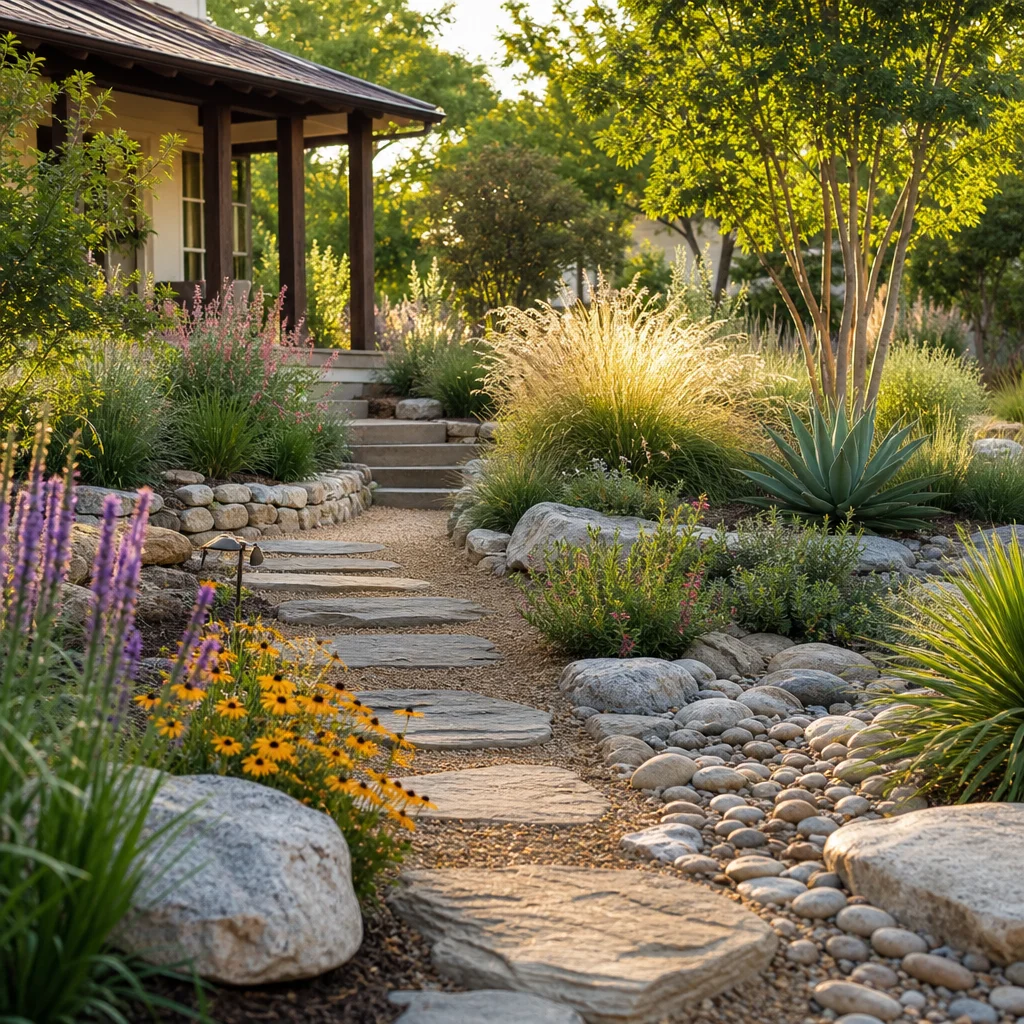
We've detailed a comprehensive guide to Louisiana native plants that covers planting strategies and design applications specific to our region.
Action step: Walk your property at different times of year. Note areas that receive afternoon shade, wind exposure, or soil compaction. These microclimates help us select native species perfectly suited to each zone.
Ornamental Grasses and Groundcovers for Dry Landscapes
Ornamental grasses anchor water-wise landscapes while providing texture, movement, and seasonal interest. Switchgrass (Panicum virgatum) offers vibrant fall color and incredible drought tolerance once established. Autumn fern and Texas fescue handle both dry and moist conditions, making them versatile choices for variable microclimates.
Groundcovers serve dual purposes: reducing bare soil that invites weeds while lowering evaporation rates. Creeping thyme thrives in Louisiana gardens despite periodic dry spells. Trailing rosemary spreads gracefully across slopes and provides culinary appeal alongside landscape function. Asiatic jasmine covers large areas quickly and maintains color year-round with minimal intervention.
For shaded areas, native sedges provide elegant solutions. They spread slowly but steadily and tolerate the dry shade beneath mature oaks and pines that challenge most lawn alternatives. Liriope offers similar benefits with lovely purple flower spikes and evergreen foliage.
The key is layering groundcovers strategically. Taller grasses in back gradually transition to lower groundcovers in front, creating dimension while maximizing coverage and water efficiency.
Action step: Photograph your landscape from multiple angles and distances. This visual reference helps us identify which spaces work best for ornamental grasses versus compact groundcovers.
Trees and Shrubs for Long-Term Water Conservation
Established trees and shrubs form the structural backbone of any sustainable landscape. Live oak, native to our region, provides shade, longevity, and drought tolerance once its deep root system develops. Bald cypress thrives in both wet and dry conditions, offering remarkable adaptability and year-round visual character.
For shrub-sized plantings, wax myrtle delivers evergreen foliage, attractive berries, and genuine drought resistance. Yaupon holly provides similar benefits with striking red berries that persist through winter. Both adapt readily to acidic Louisiana soils and tolerate the heat our region experiences during peak summer.
Fringe tree offers delicate spring flowers and reliable dry-season performance. American hornbeam thrives in understory conditions with minimal water supplementation. These long-lived choices mature into permanent landscape features that actually improve with age, providing increased shade and root establishment.
When selecting trees, consider ultimate size relative to your property and proximity to structures. We recommend planting larger specimens at least 15 feet from buildings to prevent foundation and drainage issues as root systems expand.
Action step: Identify any existing mature trees you want to preserve. Their shade and established root systems influence which new plantings will succeed in your specific landscape.
Designing Your Water-Wise Landscape with Purpose
Effective drought-tolerant landscaping doesn't happen randomly. We start by grouping plants by water needs, clustering drought-tolerant species together and reserving supplemental irrigation for specific areas that truly need it. This "hydrozoning" approach minimizes waste while simplifying maintenance protocols.
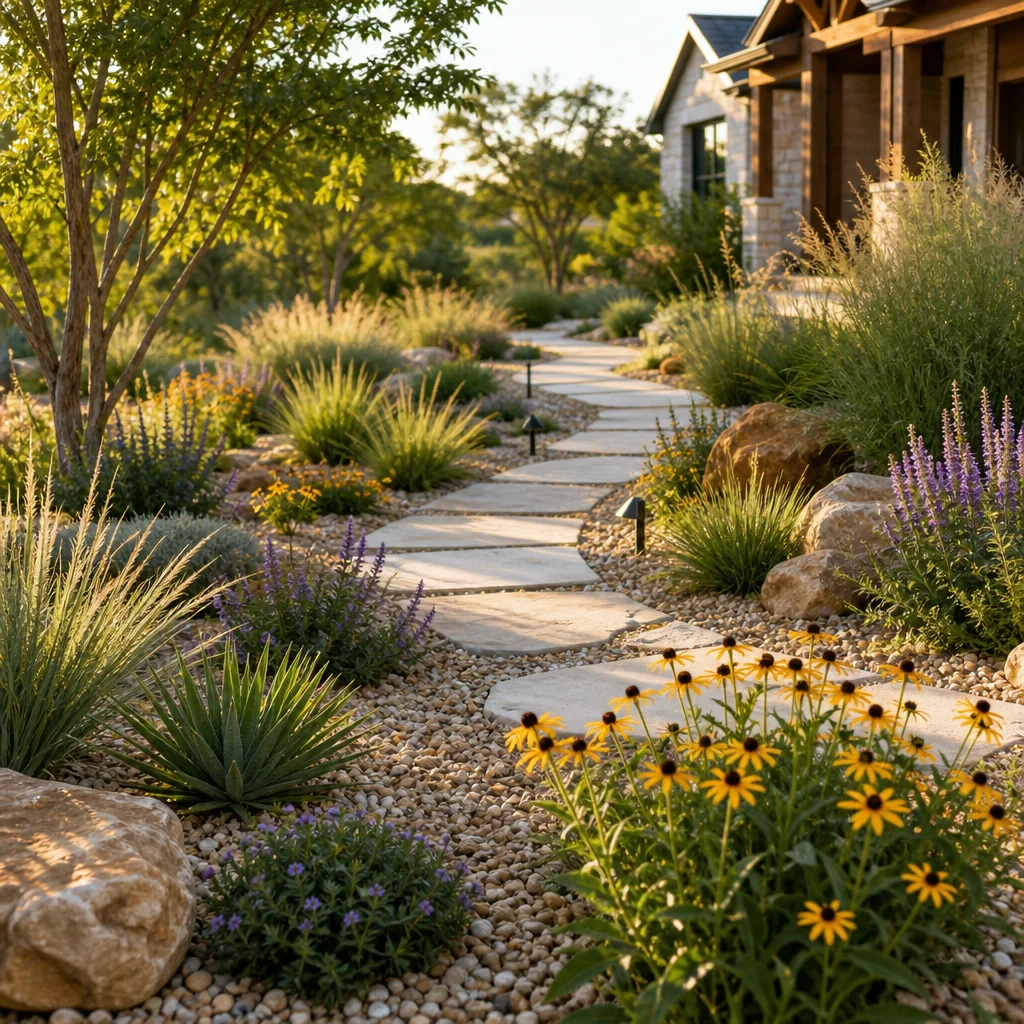
Slope and elevation affect water distribution naturally. Higher areas dry faster and suit drought-tolerant plants perfectly. Lower-lying zones retain moisture longer and can accommodate plants with moderate water needs. Working with existing topography rather than against it produces more authentic results.
Sun exposure varies throughout your property. South-facing slopes bake during summer and demand the most drought-tolerant selections. North-facing areas stay cooler and retain moisture longer. East and west exposures present intermediate conditions. A thoughtfully designed landscape accounts for these variations rather than applying one-size-fits-all planting strategies.
We develop 3D landscape renderings that help you visualize how these elements combine. You'll see mature plant sizes, seasonal color changes, and overall landscape flow before any work begins.
Action step: Note which areas receive full sun, partial shade, and dense shade. Track these patterns through morning, afternoon, and evening. This detailed understanding allows us to create a genuinely functional design.
Hardscaping Strategies to Complement Drought-Tolerant Plants
Thoughtfully selected hardscaping reduces the lawn area requiring irrigation while creating functional outdoor spaces. Native stone patios, permeable paver walkways, and gravel pathways integrate beautifully with drought-tolerant plantings while managing water flow naturally.
Permeable hardscaping materials allow rainwater to penetrate soil rather than running off, recharging underground water supplies. This approach supports plant establishment and reduces stormwater management concerns on your property. Stone retaining walls create terracing opportunities, with each level providing microclimatic advantages for specific plant selections.
Mulch serves as both aesthetic material and moisture conservation tool. Native wood chips suppress weeds while moderating soil temperature and reducing evaporation. We apply mulch in appropriate depths (typically 3-4 inches) around plantings without creating problematic piles against tree trunks.
Hardscaping also defines movement through your landscape, directing foot traffic away from planted areas and reducing soil compaction around sensitive root systems.
Action step: Sketch your property layout and identify high-traffic areas. These zones are ideal for hardscaping, while quieter perimeter areas work well for dense plantings.
Irrigation Solutions That Work with Your Plant Selection
Even drought-tolerant plants benefit from smart irrigation during establishment and occasional dry spells. Underground irrigation systems deliver water efficiently to plant root zones, minimizing waste through evaporation or runoff. We design systems with multiple zones, allowing independent control of different landscape areas based on their specific water needs.
Drip irrigation, whether subsurface or surface-mounted, proves far more efficient than traditional sprinkler systems. Water reaches soil directly, reducing evaporative loss and preventing foliar diseases that thrive in high-humidity environments. Soaker hoses work beautifully for individual plantings and feature-specific areas.
Smart controllers adjust watering schedules based on rainfall, temperature, and humidity, eliminating unnecessary supplemental irrigation. These systems pay for themselves through reduced water consumption and eliminate the guesswork from manual watering schedules.
For mature, well-established drought-tolerant landscapes, minimal to no supplemental irrigation becomes necessary except during exceptional dry periods. The goal is designing systems you'll eventually need less as plants mature.
Action step: If you currently have irrigation, request a system audit. We'll identify opportunities to improve efficiency and reduce consumption while maintaining healthy plantings.
Maintenance Practices for Drought-Resistant Landscapes
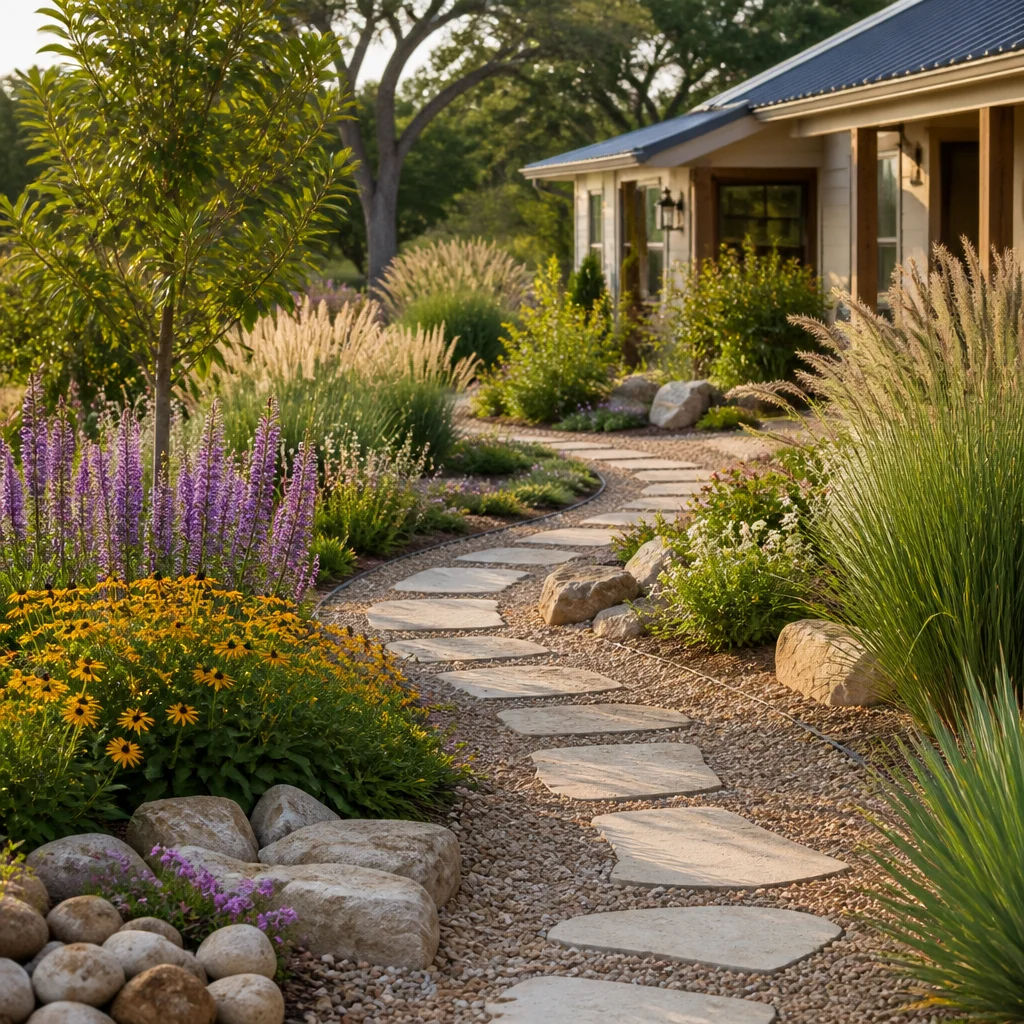
Properly maintained drought-tolerant landscapes remain beautiful and functional for years with minimal intervention. Seasonal pruning removes dead wood, maintains shape, and encourages healthy growth. Most drought-tolerant native plants prefer lighter pruning rather than aggressive cutting, which can stress established specimens.
Mulch refreshing annually maintains moisture retention and weed suppression benefits. As organic mulch decomposes, it enriches soil structure and increases water-holding capacity. Adding fresh mulch every 12-18 months sustains these benefits.
Monitoring for pests and diseases remains important even in low-water landscapes. Healthy, well-established plants resist problems naturally, but early detection prevents minor issues from becoming landscape-altering infestations. We conduct seasonal inspections and recommend targeted treatments only when necessary.
Deadheading spent flowers on ornamental plants encourages continued blooming and maintains neat appearance without requiring specialized equipment or excessive labor.
Action step: Schedule monthly landscape walk-throughs during growing season. Note which areas need attention and which thrive independently. This rhythm helps us refine maintenance protocols based on actual performance.
How We Design Custom Drought-Tolerant Landscapes in Lafayette
We begin every project by understanding your lifestyle, aesthetic preferences, and long-term property goals. Some clients prioritize year-round color; others prefer clean, minimalist designs with textural interest. Your vision drives our plant selection and overall layout strategy.
Our team conducts thorough site analysis, evaluating soil conditions, drainage patterns, sun exposure, and microclimates across your property. We document existing vegetation worth preserving and identify areas requiring transformation. This detailed assessment informs every design decision.
We develop custom 3D landscape renderings that show exactly how your space will appear at maturity. You'll see seasonal variations, understand maintenance requirements, and make confident decisions before any installation begins. Our approach eliminates surprises and ensures your final landscape meets both practical and aesthetic expectations.
Installation focuses on proper planting technique, appropriate spacing, and immediate establishment support. We handle grading, soil amendment, irrigation installation, and mulching to give your new landscape every advantage. Post-installation monitoring during the critical first growing season ensures healthy establishment.
We'd love to discuss your Lafayette property and develop a water-wise landscape tailored to your specific needs and preferences. Contact us today for a consultation.
Action step: Gather recent photos of your landscape from multiple angles. Jot down specific concerns, favorite plant colors, and your maintenance comfort level. These details help us design a landscape you'll genuinely enjoy.
Frequently Asked Questions (FAQ)
Can drought-tolerant plants really survive Lafayette's heat and humidity?
Yes, and we've designed hundreds of landscapes proving it. While our Louisiana climate brings regular rainfall, our intense summer heat and occasional dry spells stress traditional plants. We focus on native species and adapted ornamentals that thrive in our specific soil conditions and seasonal patterns. These plants actually perform better than water-hungry alternatives when properly matched to their planting locations.
How do we balance drought-resistant plants with irrigation in our Lafayette designs?
We design smart irrigation systems that work with your plants rather than against them. Our underground solutions deliver water efficiently to newly established plantings while allowing mature drought-tolerant specimens to rely on deep root systems and natural rainfall. We customize each system based on soil type, plant selection, and sun exposure so you're not wasting water or money once your landscape matures.
What's the real maintenance difference between drought-tolerant and traditional landscapes?
Our drought-resistant designs actually reduce your workload significantly. We handle seasonal adjustments and strategic pruning through our maintenance plans, but you'll notice fewer problems with pests, diseases, and dying plants. Once established, these landscapes need less fertilizer, fewer chemical treatments, and minimal intervention compared to plants constantly stressed by poor water management.


