



Table of Contents
- Why Lafayette Homeowners Are Choosing Edible Gardens for Their Yards
- Planning Your Edible Garden: Site Selection and Soil Assessment
- Designing Your Custom Edible Garden Layout with 3D Visualization
- Preparing the Foundation: Soil, Drainage, and Irrigation for Success
- Installing Raised Beds, In-Ground Gardens, and Hardscaping Elements
- Selecting the Right Plants and Vegetables for Lafayette's Climate
- Setting Up Professional Irrigation Systems for Consistent Growth
- Establishing a Maintenance Schedule to Keep Your Garden Thriving
- How We Handle the Complete Installation Process From Start to Finish
- Protecting Your Investment: Seasonal Care and Garden Support Services
- Frequently Asked Questions (FAQ)
Why Lafayette Homeowners Are Choosing Edible Gardens for Their Yards
More Lafayette homeowners are discovering that growing their own vegetables transforms both their outdoor space and their daily lives. An edible garden delivers fresh produce steps from your kitchen, reduces grocery costs, and creates a sustainable food source right in your backyard. Beyond the practical benefits, these gardens add real character to your property while supporting local pollinators and improving soil health.
We've noticed a shift in what our clients want from their outdoor spaces. Rather than purely decorative landscapes, they're seeking functional gardens that produce food, encourage family time, and reflect their commitment to sustainability. A well-designed edible garden does all of this while maintaining the aesthetic appeal of your property. Whether you're growing herbs near your patio or cultivating a full vegetable plot, the investment pays dividends season after season.
The appeal is simple: knowing exactly where your tomatoes, lettuce, and peppers come from. It's about quality, freshness, and control over what grows in your yard.
Planning Your Edible Garden: Site Selection and Soil Assessment
Success starts with understanding your property's unique conditions. Most vegetables need six to eight hours of direct sunlight daily, so your first step is mapping sun exposure throughout your yard. Spend a morning observing which areas receive consistent light and which fall into shade during key growing hours. North-facing spots near trees won't cut it for tomatoes or squash, but they work perfectly for shade-tolerant herbs like mint and parsley.
Soil quality matters just as much as sunlight. Before breaking ground, test your soil's pH, nutrient levels, and composition. Lafayette's naturally acidic, clayey soil often needs amendment to create the balanced growing medium vegetables demand. A professional soil assessment reveals whether you're working with clay-heavy earth, sandy soil that drains too quickly, or a mixture that needs adjustment.
Consider these evaluation points:
- Sun exposure: Minimum six hours for most vegetables, eight hours for fruiting crops
- Drainage patterns: Observe where water pools during rain
- Proximity to utilities: Mark underground lines before digging
- Access to water sources: Distance from your outdoor faucet matters for irrigation
- Proximity to your home: Closer gardens encourage regular harvesting and maintenance
Taking time to assess your site properly eliminates costly mistakes down the road.
Designing Your Custom Edible Garden Layout with 3D Visualization
Visualization transforms vague ideas into concrete plans. We create 3D renderings that show exactly how your edible garden will look, function, and flow within your landscape. This technology lets you see bed placement, pathway layouts, and how your garden integrates with existing hardscaping before a single shovel touches soil.
A good design balances aesthetic appeal with functional production. Raised beds arranged in accessible rows make harvesting and maintenance straightforward. Vertical elements like trellises for beans and cucumbers maximize space and visual interest. Pathways between beds prevent soil compaction and make navigation easy when you're picking vegetables at peak ripeness.
Your design should account for growth patterns. Tall plants like sunflowers belong on the north side where they won't shade shorter crops. Companion planting strategies (like growing basil near tomatoes) can improve yields and naturally deter pests. Herbs positioned closest to your kitchen door get used more frequently, so placement influences how much you actually harvest and enjoy your garden.

We recommend sketching out your layout on paper first, then translating it into our detailed 3D models so you can confirm every element before installation begins.
Preparing the Foundation: Soil, Drainage, and Irrigation for Success
Quality soil is the foundation of every productive edible garden. Lafayette's native clay soil compacts easily and drains poorly, so amendment is essential. We typically incorporate aged compost, peat moss, and perlite to create the loose, nutrient-rich medium vegetables thrive in. The goal is soil that holds moisture without becoming waterlogged and provides easy root penetration.
Drainage prevents standing water that rots roots and invites disease. If your yard naturally pools water, raised beds solve the problem immediately. For in-ground gardens, we evaluate slope and may grade the area slightly to ensure water moves away from planted beds. Proper drainage becomes especially critical during Lafayette's rainy season when inches of water fall within hours.
Underground irrigation systems deliver water directly to root zones, minimizing waste and reducing disease pressure from wet foliage. Drip lines or soaker hoses apply water exactly where plants need it, not on leaves or pathways. This efficiency matters in both summer's intense heat and during spring's unpredictable wet spells. A timer-controlled system means your garden stays hydrated even when you're away or managing a busy schedule.
Investing in solid foundation work now prevents ongoing problems and dramatically improves your garden's success rate.
Installing Raised Beds, In-Ground Gardens, and Hardscaping Elements
Your structural choices define how the garden functions and looks. Raised beds offer distinct advantages: they warm faster in spring (extending your growing season), provide excellent drainage control, and make harvesting comfortable without excessive bending. We build ours from rot-resistant cedar or composite materials that last for years in Louisiana's humid climate.
In-ground gardens work well on properties with good existing soil and adequate space. They integrate seamlessly with the landscape and require no construction materials, but they demand more careful soil preparation and amendment. We often blend approaches: a few raised beds for close-to-home herbs and salad greens, with larger in-ground zones for sprawling crops like squash and melon.
Hardscaping elements define the garden's character and functionality. Gravel or mulch pathways prevent muddy walkways and create visual separation between beds. Decorative fencing or trellises add structure while serving practical purposes (supporting vining crops or excluding pests). Stone or composite edging creates clean lines and prevents grass from creeping into planted areas.
The hardscape establishes your garden's bones and significantly impacts how enjoyable it is to use and maintain throughout the season.
Selecting the Right Plants and Vegetables for Lafayette's Climate
Lafayette's warm, humid subtropical climate supports an extended growing season compared to much of the country. We split our planting calendar into cool-season crops (October through February) and warm-season crops (March through September), with a brief transition in spring and fall.
Cool-season vegetables thrive in our mild winters:
- Leafy greens: lettuce, spinach, kale, arugula
- Root crops: carrots, beets, turnips, radishes
- Brassicas: broccoli, cabbage, cauliflower
- Herbs: cilantro, parsley, dill, chives
Warm-season crops produce heavily during spring and summer:

- Fruiting vegetables: tomatoes, peppers, eggplant
- Cucurbits: squash, zucchini, cucumbers, melons
- Legumes: pole beans, lima beans, okra
- Fruiting herbs: basil, oregano
Start with varieties you actually eat and know you'll harvest. A prolific tomato plant is wonderful; a prolific squash plant becomes overwhelming if your household doesn't love squash. Choose disease-resistant varieties whenever possible because Louisiana's humidity invites fungal problems.
Local nurseries carry transplants suited to our climate, and seed catalogs now specifically label varieties for Zone 9a growing. This targeted selection vastly improves your success rate compared to generic gardening advice from other regions.
Setting Up Professional Irrigation Systems for Consistent Growth
Consistent watering beats irregular heavy soaking for productive vegetables. Most crops need one to two inches of water weekly, delivered slowly so soil absorbs it rather than runoff occurring. Professional irrigation systems achieve this reliability automatically, whether you're home or traveling.
Drip irrigation delivers water through perforated tubing laid directly along plant roots. Each plant gets consistent moisture without waste, and wet leaves stay dry (reducing disease). We design these systems with adjustable emitters so you can fine-tune water delivery to different plants. Tomatoes might need steady moisture, while herbs tolerate drier conditions.
Soaker hoses work for smaller gardens or raised beds where you want simplicity. Lay them on soil surface under mulch, connect to your outdoor spigot, and use a timer for automated watering. They're less flexible than drip systems but cost less and require minimal maintenance.
A quality timer converts any irrigation setup into an autopilot system. Set it once, and your garden receives consistent water regardless of your schedule. This consistency produces better yields and reduces plant stress during hot spells. Proper irrigation systems are among the best investments you can make in long-term garden success.
Establishing a Maintenance Schedule to Keep Your Garden Thriving
Regular maintenance separates thriving gardens from struggling ones. Create a simple weekly checklist: harvest ripe vegetables (which encourages more production), hand-pick visible pests, and monitor soil moisture. This 30-minute weekly commitment prevents small issues from becoming big problems.
Seasonal tasks ensure year-round productivity. Spring focuses on soil amendment and transplant hardening before planting season. Summer demands consistent watering and pest monitoring. Fall involves extending the cool-season harvest as temperatures drop. Winter is lighter but includes planning next year's crops and refreshing soil with compost.
Pest management in Lafayette requires vigilance but responds well to organic methods. Regular inspection catches infestations early when hand-picking or organic sprays work effectively. Healthy soil and proper spacing improve plant vigor, making them naturally more resistant to pest damage. We recommend avoiding broad-spectrum pesticides that kill beneficial insects alongside pests.
Document what works on your property. Note planting dates, which varieties produced well, pest problems encountered, and solutions attempted. This record becomes invaluable next year, turning each season into a building block toward a genuinely personalized system.
How We Handle the Complete Installation Process From Start to Finish
We guide you through every step, from initial assessment through harvest. Our process starts with a consultation where we understand your vision, evaluate your site conditions, and assess your available time for maintenance. We listen carefully because a beautiful garden that demands 10 hours weekly maintenance won't work for a busy family.
Next comes our detailed site analysis: soil testing, sun mapping, utility location, and slope assessment. We create comprehensive 3D renderings showing exactly how your garden will look and function. You approve the design before we order materials or break ground. This clarity prevents surprises and ensures your garden meets your expectations.
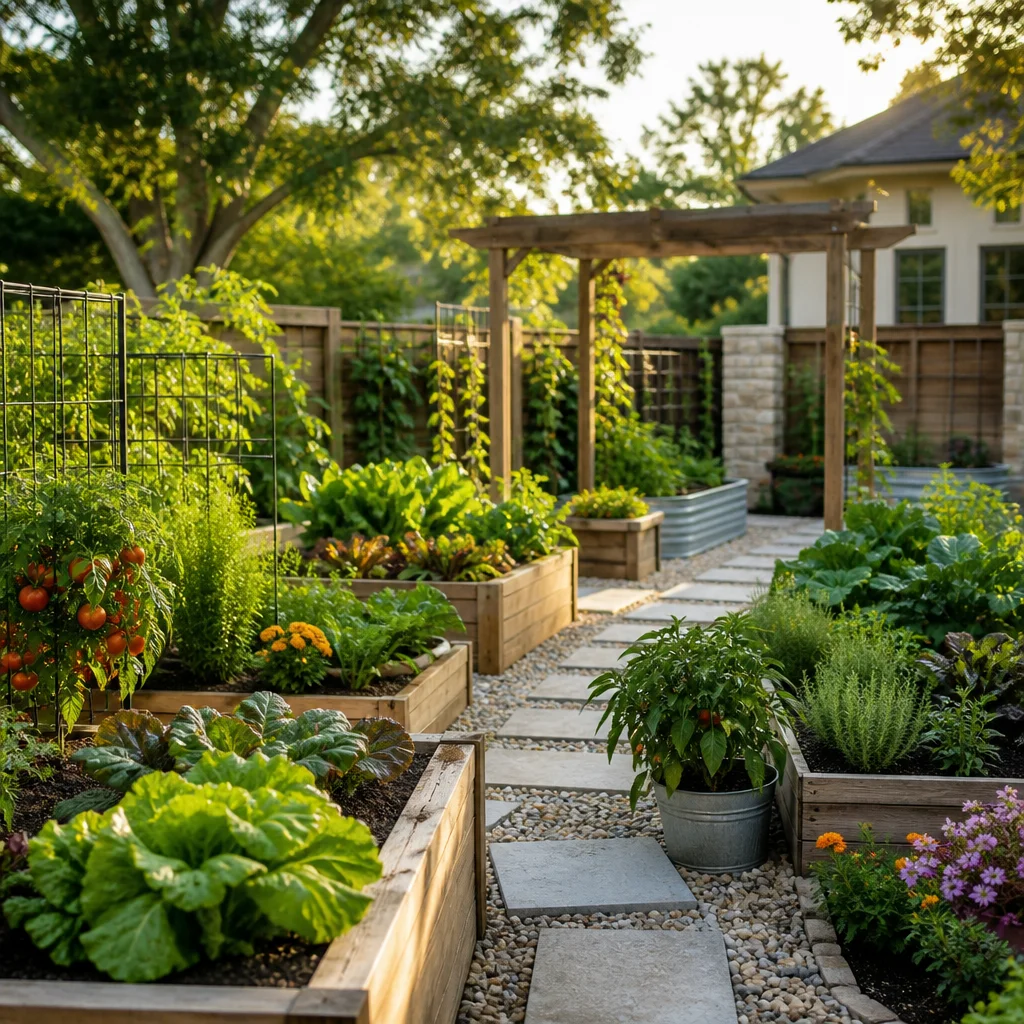
Installation happens on your timeline. We prepare beds, amend soil, install irrigation, build hardscaping elements, and handle all the heavy lifting. You can book landscaping services with us to handle everything, or you might tackle certain elements yourself while we handle the technical work like irrigation installation and soil preparation.
Once planted, we can establish an ongoing maintenance partnership. Many of our clients appreciate having professionals handle seasonal transitions, pest monitoring, and major tasks like soil refreshing. Others prefer to manage daily care themselves but contract us for specialized work.
We work at your pace and on your terms, adapting our involvement to match your needs and comfort level.
Protecting Your Investment: Seasonal Care and Garden Support Services
Your edible garden thrives with seasonal attention that addresses Lafayette's specific climate challenges. Spring preparation sets the tone for warm-season production. We refresh raised beds with compost, establish new plantings as soil warms, and optimize irrigation timing. Summer's intense heat requires consistent watering and careful pest monitoring. Fall transitions back to cool-season crops and involves soil amendment for winter production. Winter maintenance stays light but includes planning and soil conditioning.
We offer maintenance plans that match your needs. Some clients want full-service management, including all watering, harvesting, and seasonal transitions. Others prefer seasonal checkups where we assess soil conditions, recommend amendments, and handle bigger tasks while you manage daily upkeep. Monthly maintenance visits catch problems early and keep your garden performing optimally.
Seasonal support services include:
- Soil testing and amendment recommendations
- Pest monitoring and organic management strategies
- Harvest planning and succession planting schedules
- Equipment maintenance and system checks
- Seasonal plant selection and installation
Your edible garden represents a genuine investment in your property and lifestyle. Protecting that investment through professional support ensures you enjoy peak production and years of reliable harvests.
Start your journey toward fresh homegrown vegetables by evaluating your space and understanding Lafayette's unique growing conditions. We're here to guide you through design, installation, and ongoing management so your edible garden becomes a cherished feature of your outdoor home for years to come.
Frequently Asked Questions (FAQ)
What's the best time of year to install an edible garden in Lafayette?
We recommend starting your edible garden installation in early spring (February through March) or fall (September through October) for optimal plant establishment in our local climate. These seasons provide cooler temperatures and adequate rainfall, which help new plants and vegetables develop strong root systems. We can assess your specific property conditions and recommend the ideal timing based on your soil, sunlight, and the types of vegetables you want to grow.
Do we handle the entire installation process, or do we just design the garden?
We manage every step of your edible garden project from initial site assessment through final installation and beyond. Our team handles soil preparation, drainage and irrigation setup, raised bed or in-ground bed construction, plant selection, and hardscaping elements like pathways or trellises. We also establish a personalized maintenance schedule so your garden thrives throughout the seasons.
How does professional irrigation differ from hand-watering my vegetable garden?
Our professional irrigation systems deliver consistent, measured water directly to plant roots at optimal times, which reduces waste and prevents common problems like overwatering or dry spots. Hand-watering often leads to inconsistent moisture levels that stress plants and reduce yields. We design custom systems for your edible garden layout, ensuring every vegetable bed receives exactly what it needs to produce healthy crops.


